
Critical Design
Close Friends Only
The problem
How do I visualize the impacts of digital surveillance on a generation while remaining relatable?
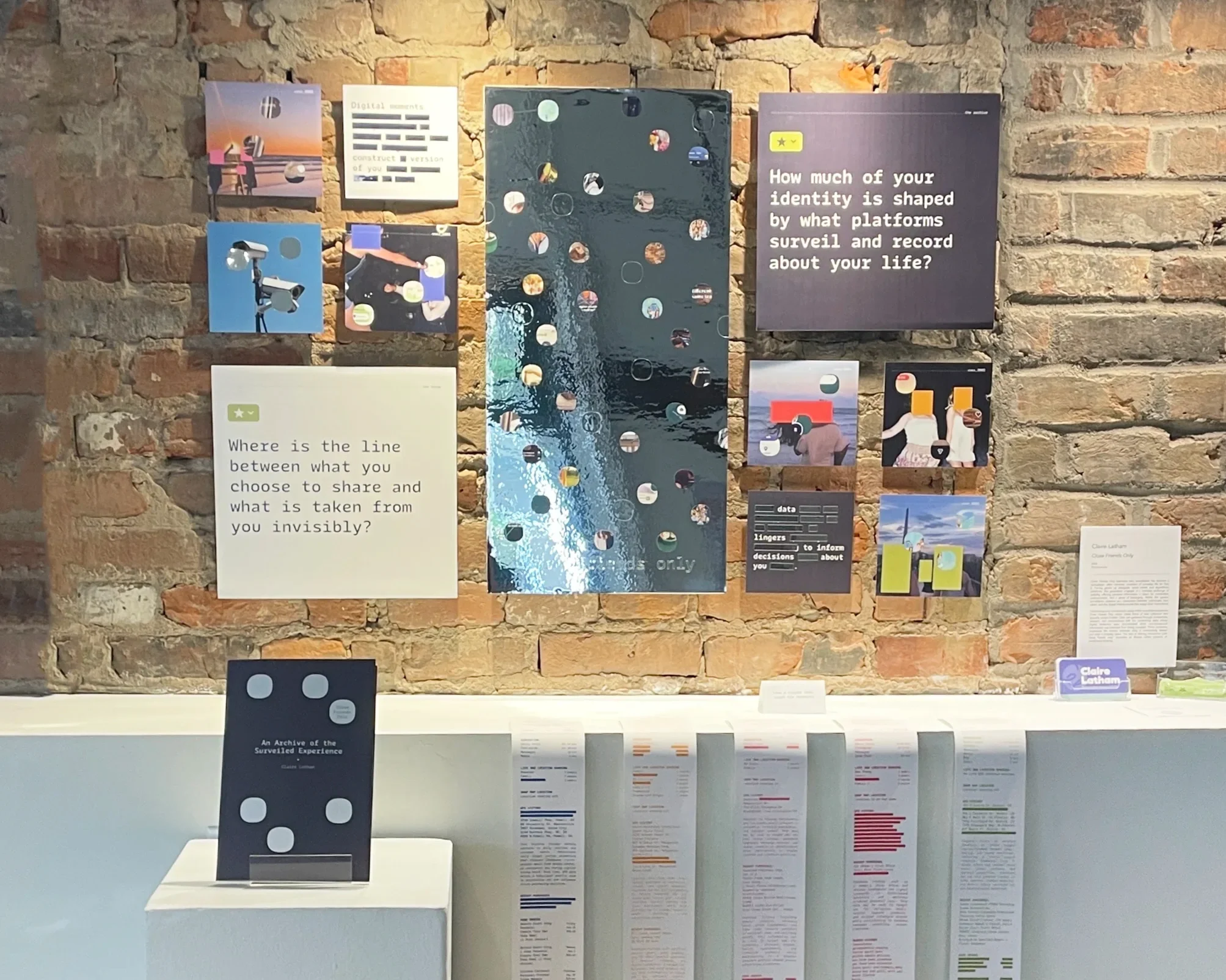
Close Friends Only explores how surveillance has become a normalized part of Gen Z’s lives. Through research and documented experiences, the project visualizes hidden systems of data collection and questions the illusion of privacy within platforms built on constant visibility.
The concept
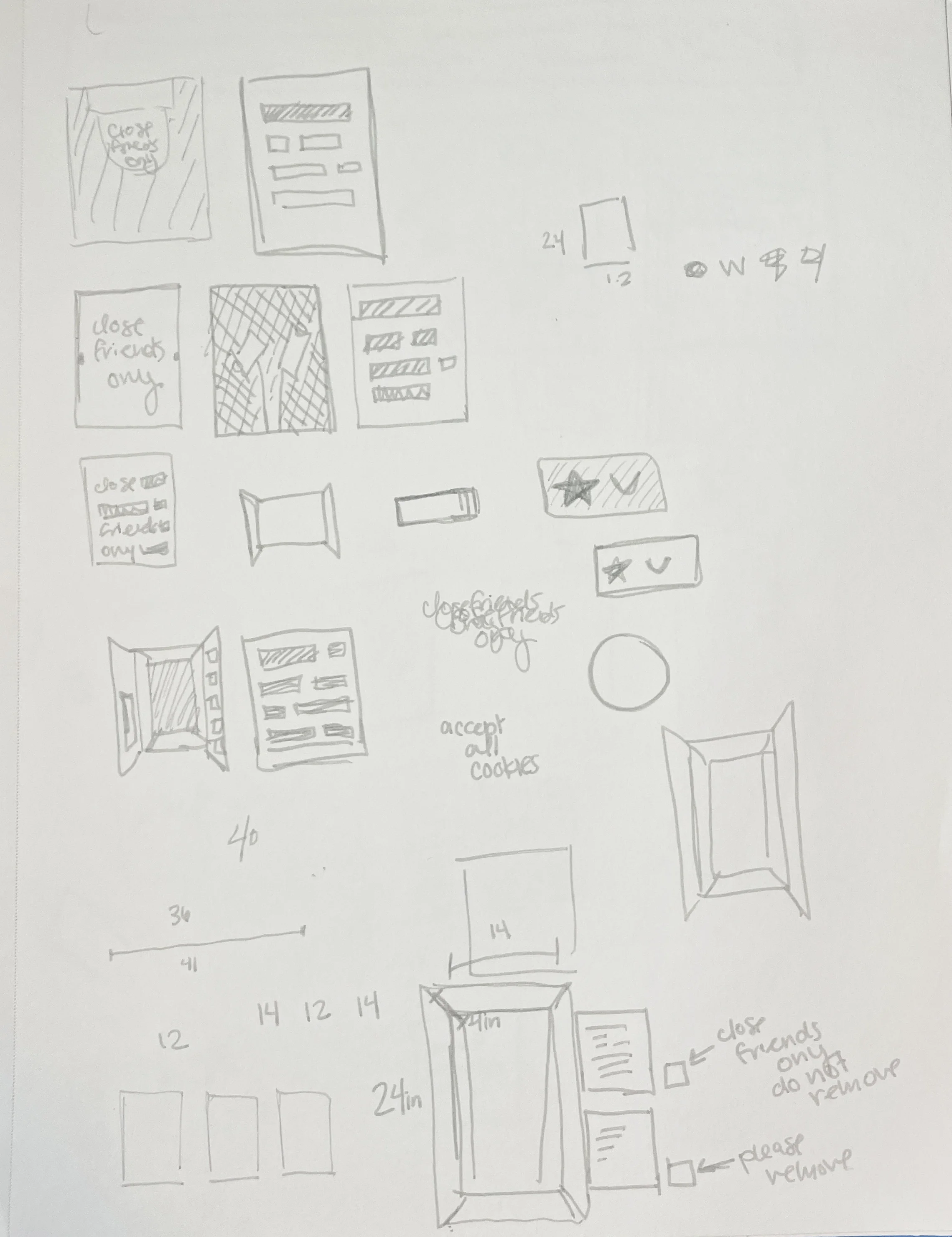
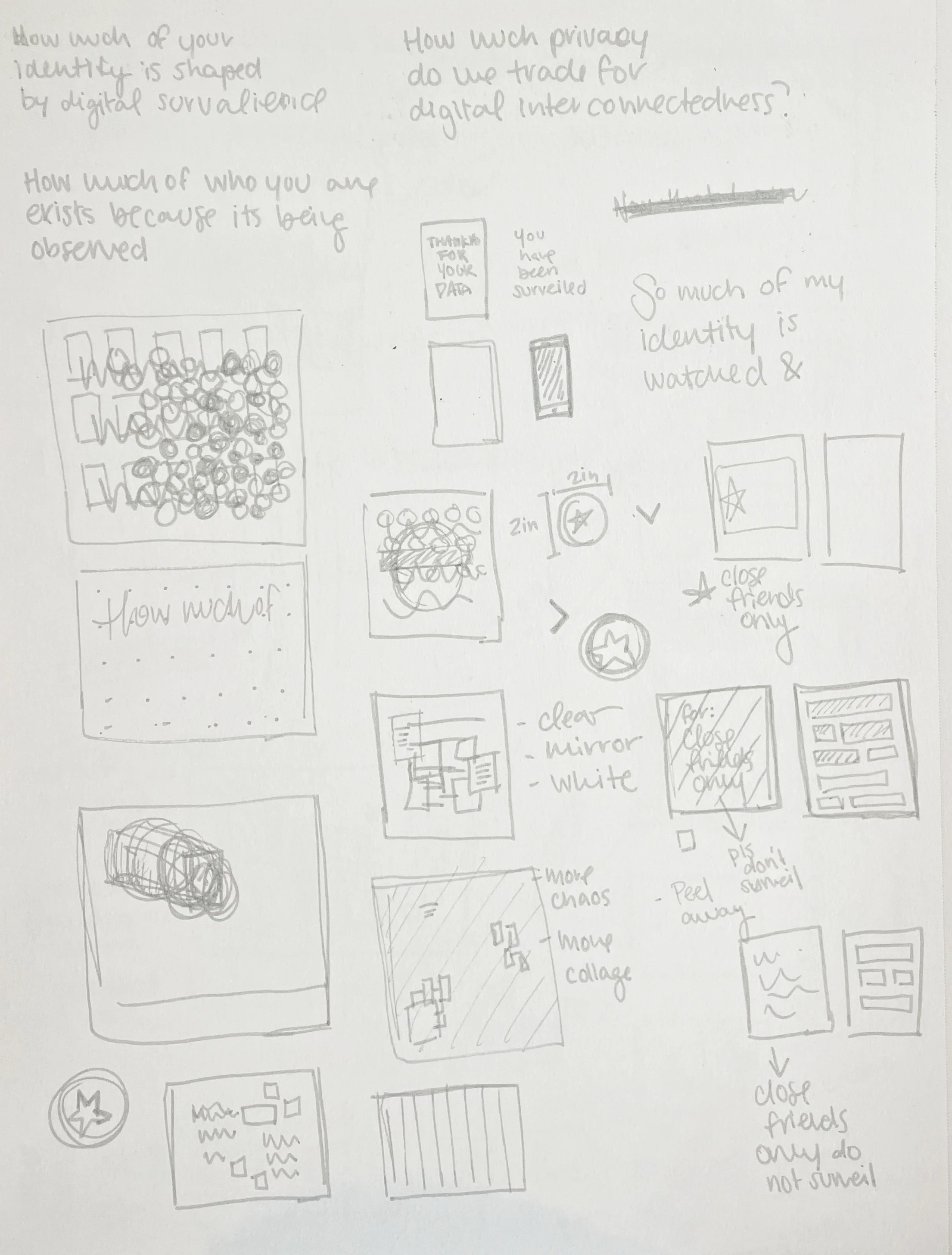
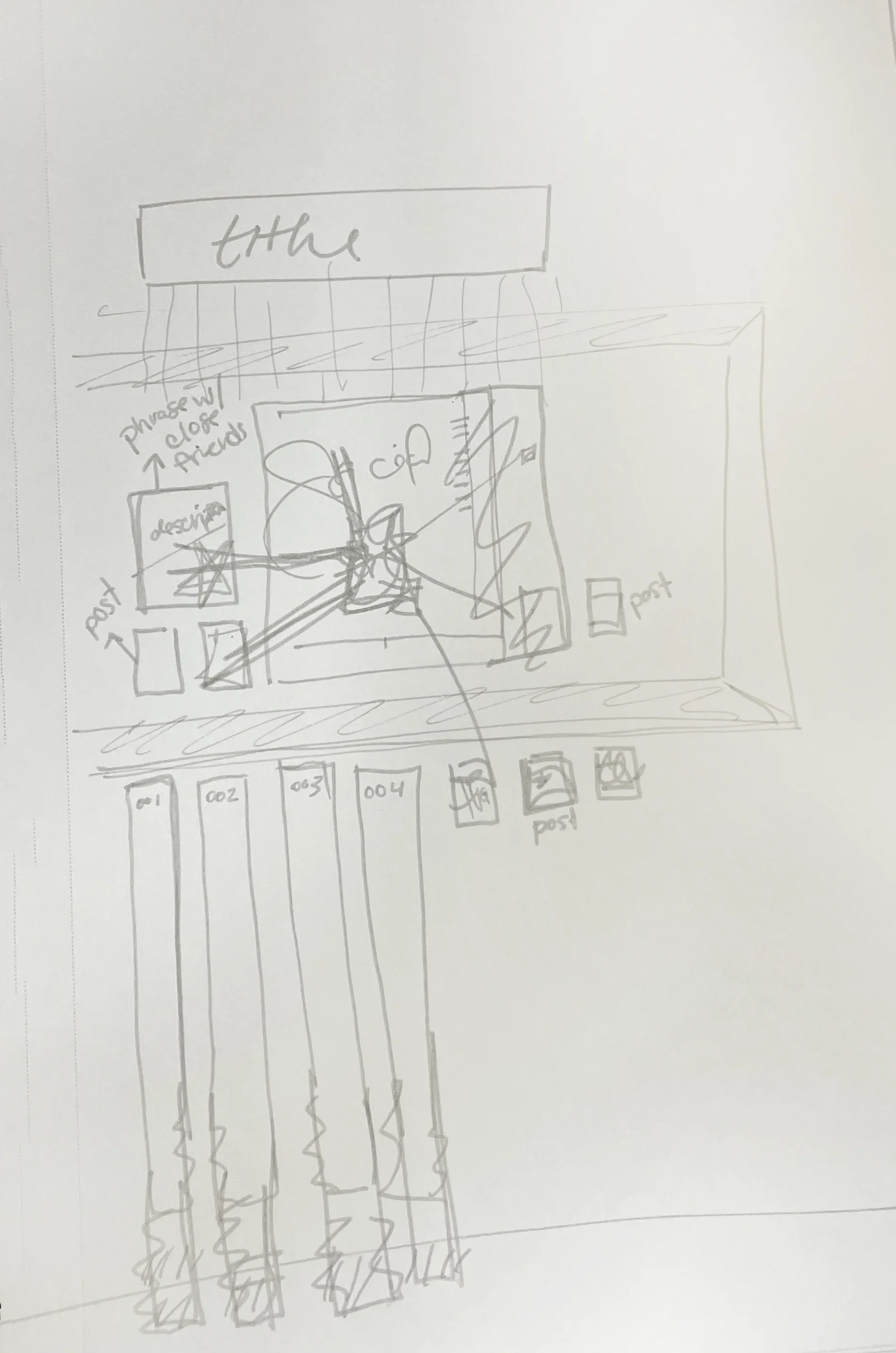
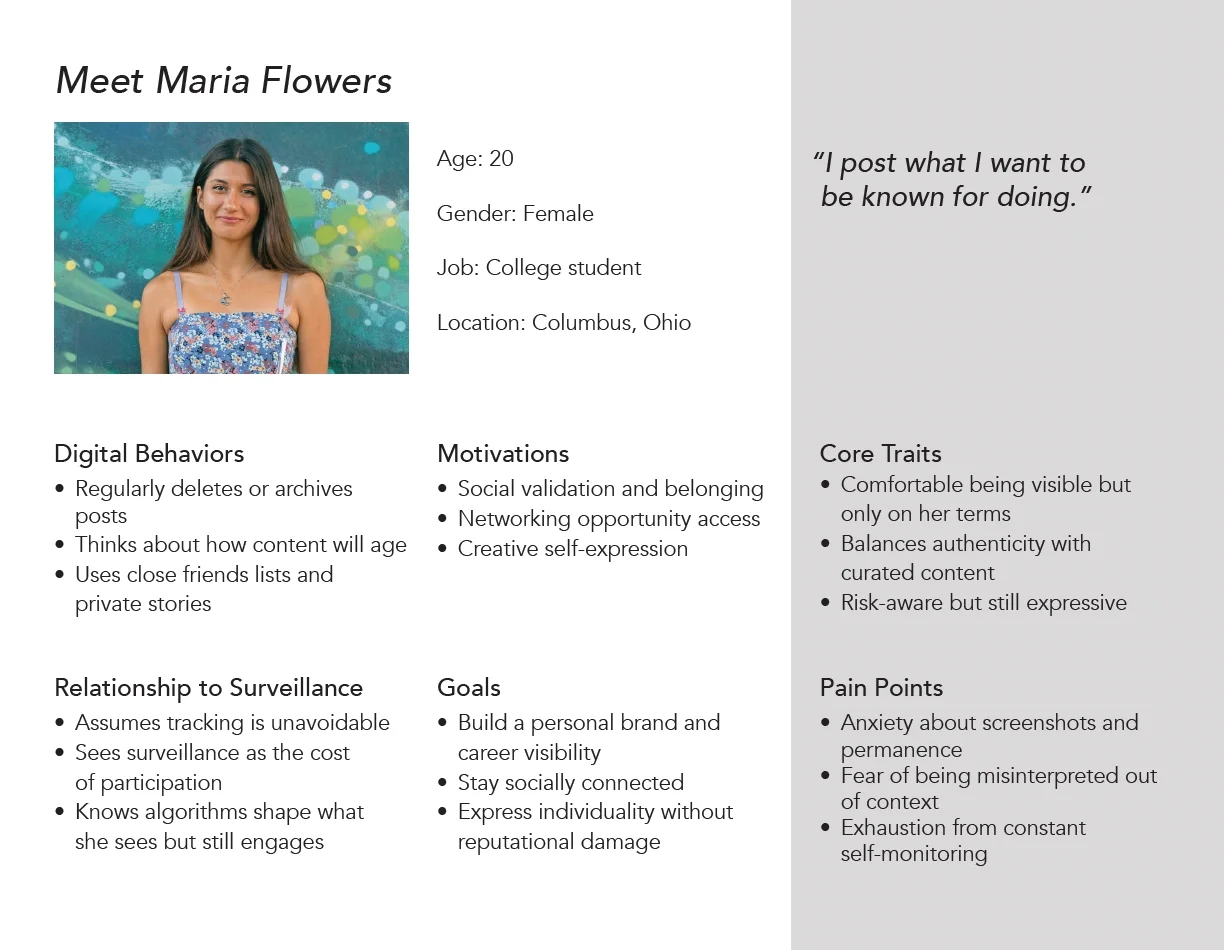
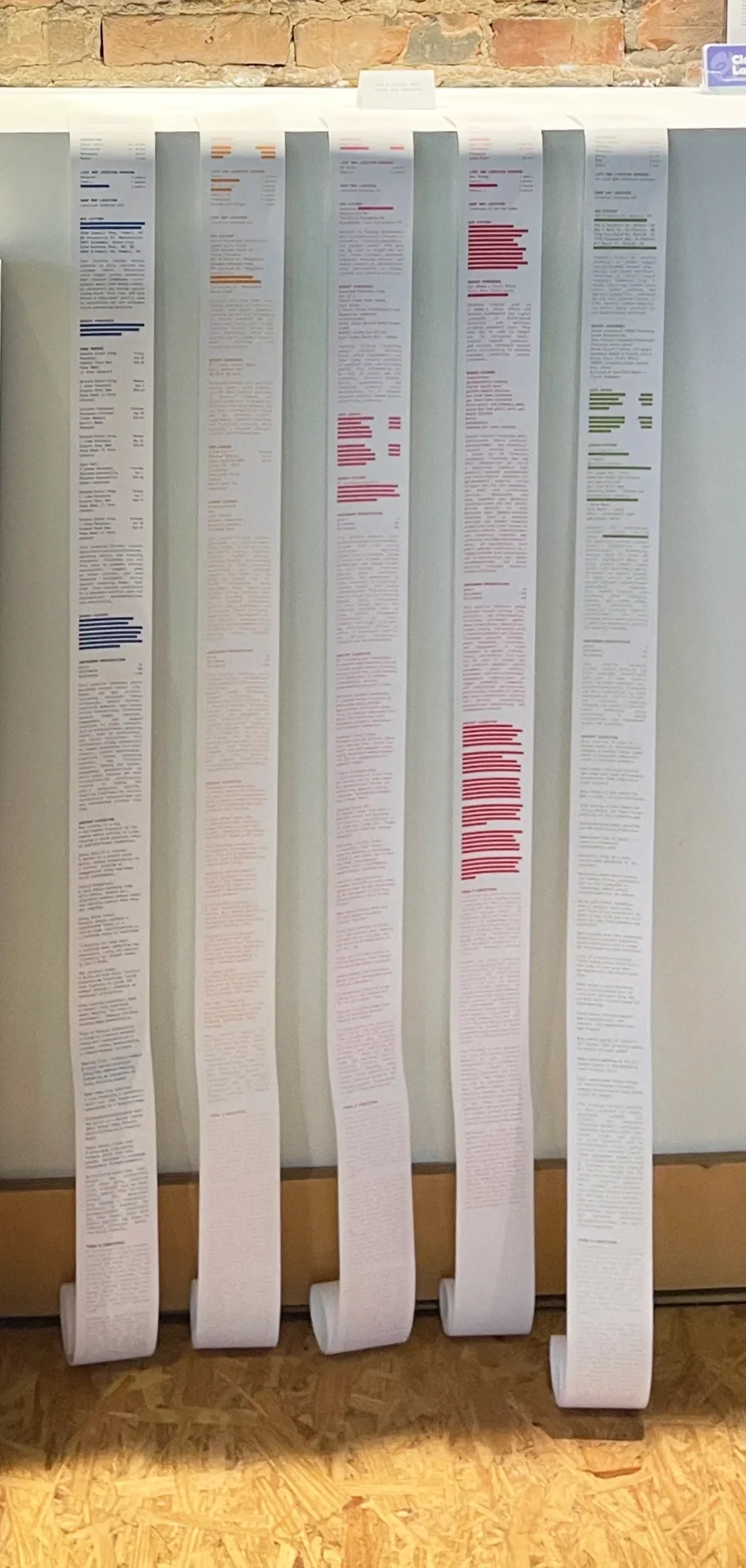
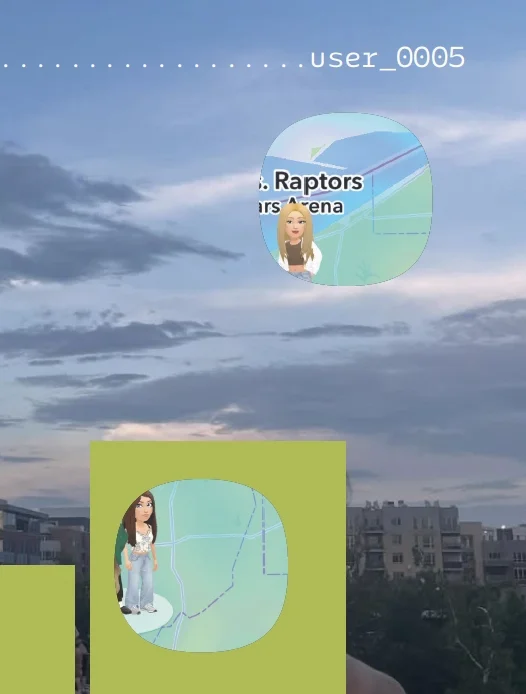
To conduct the study, I positioned myself in place of the invisible systems of surveillance, asking five consenting users to share their digital activity. This material was used to construct user profiles and visualize information typically accessed by data-driven systems. Unwanted information was redacted, emphasizing the tension between visibility and privacy.
The study
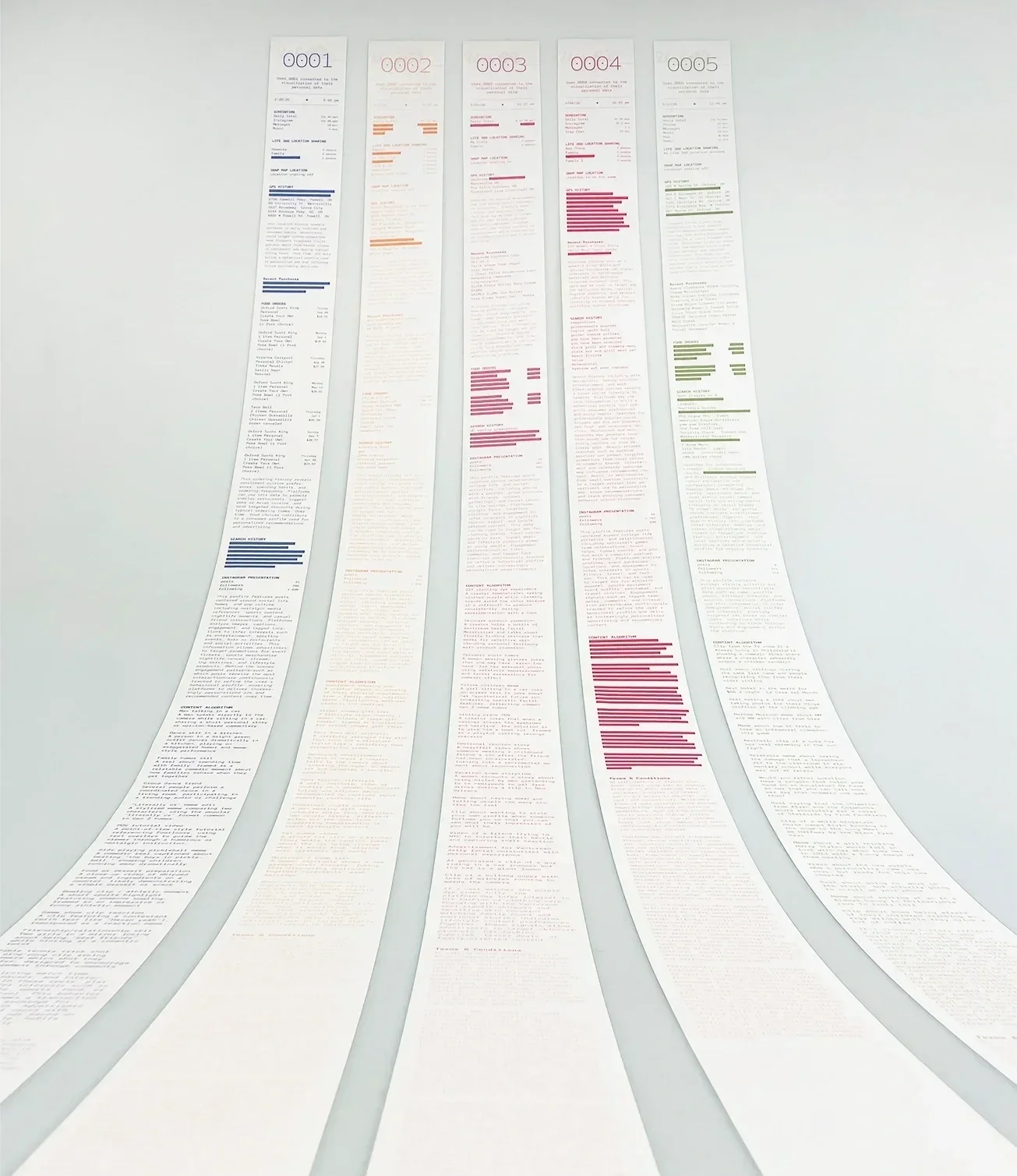
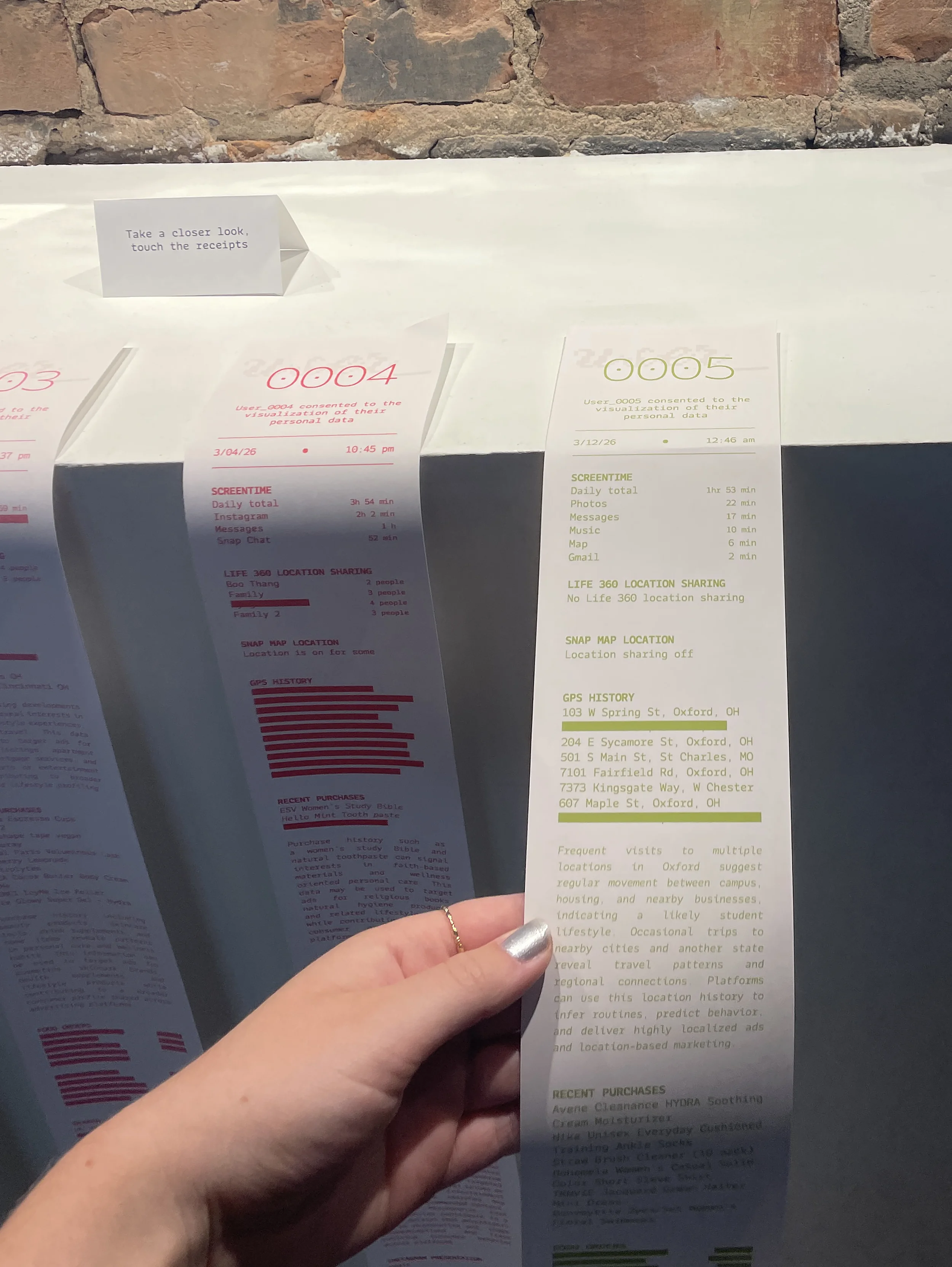
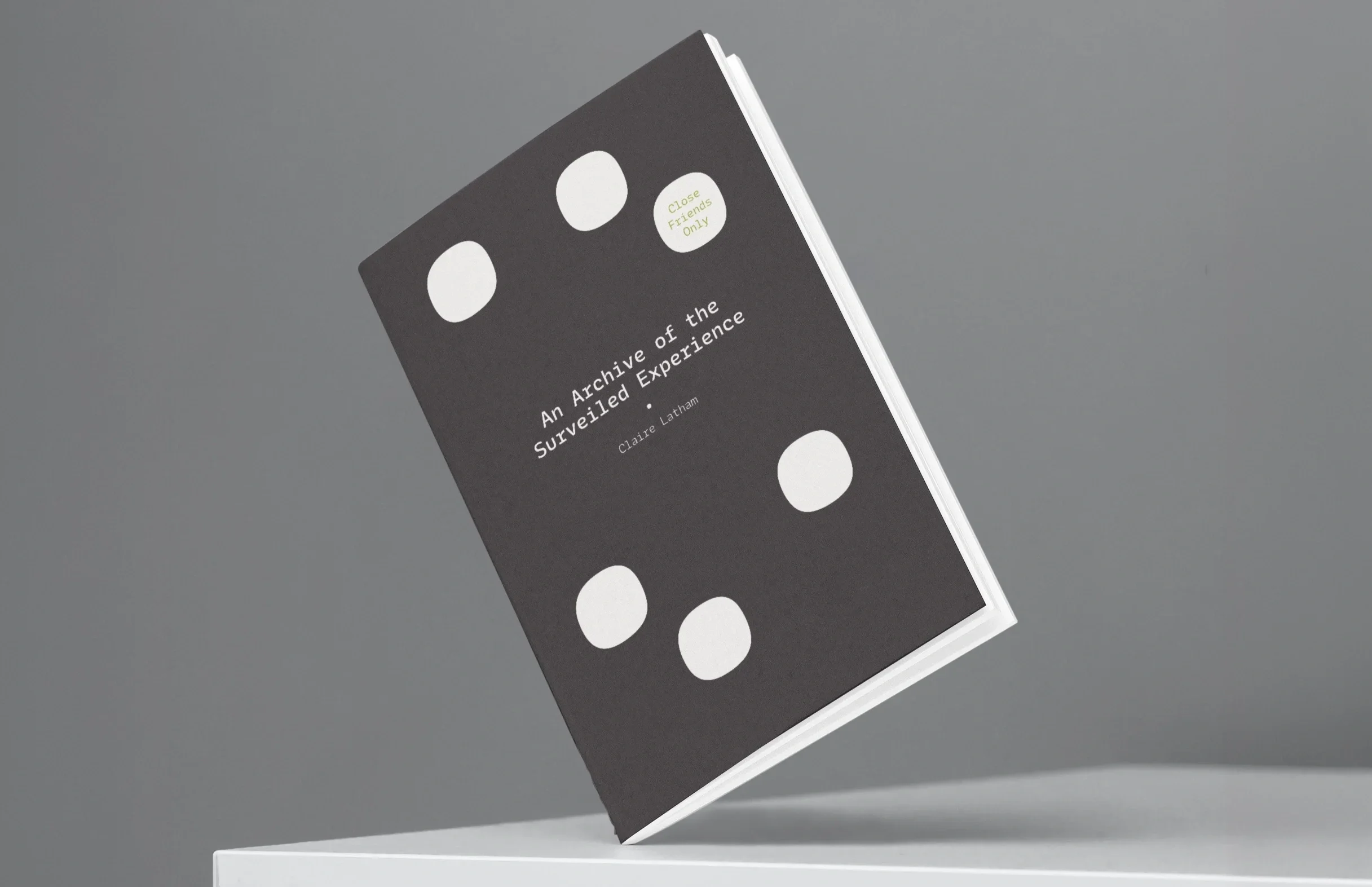
The archive acts as an extension of the study where data, screenshots, and found imagery of each user were collected and organized. In between profiles, research, guiding questions, and mirrored elements help readers reflect on and examine their own experiences with digital surveillance and recognize the effects it may or may not have on their identity.
The archive
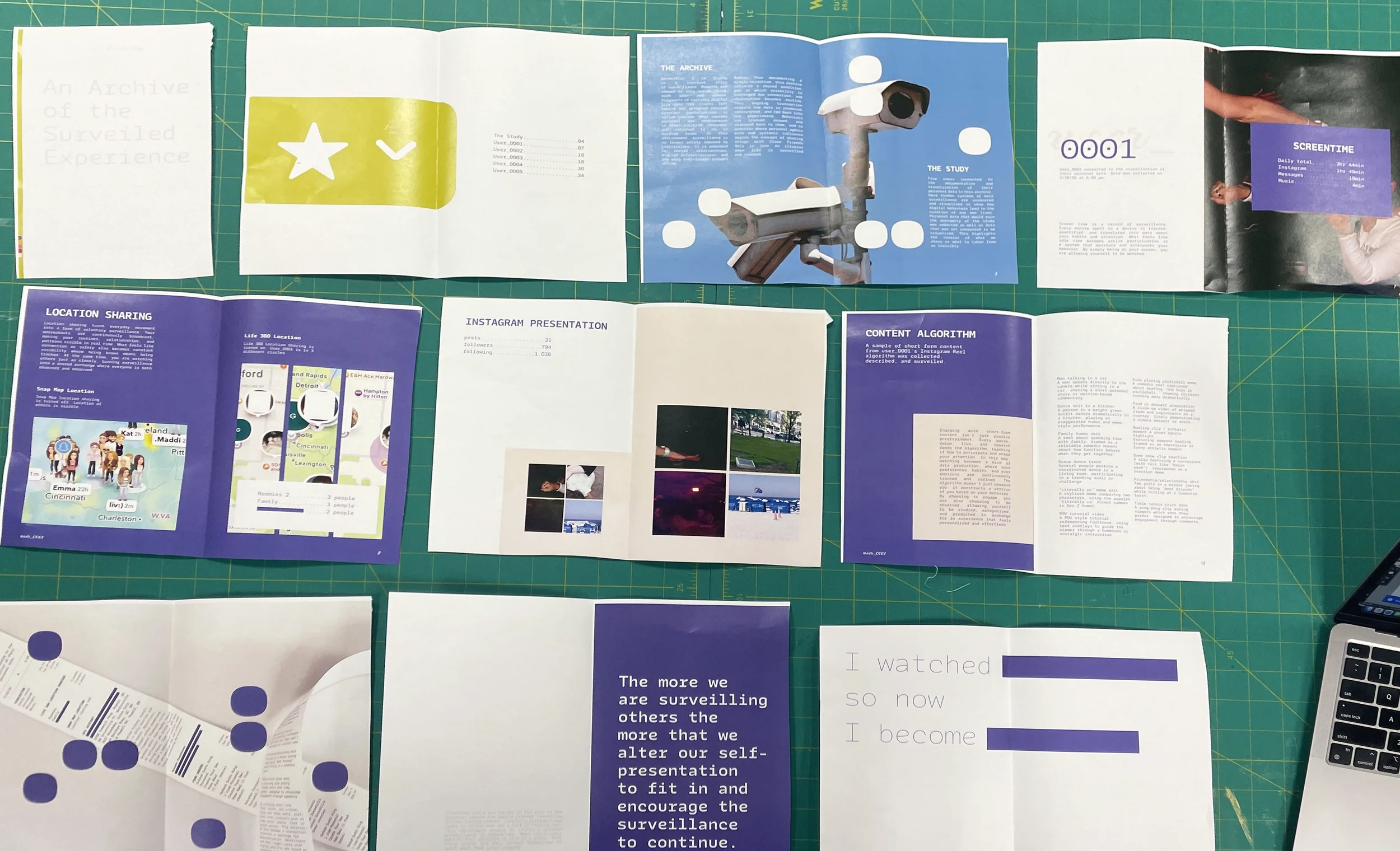
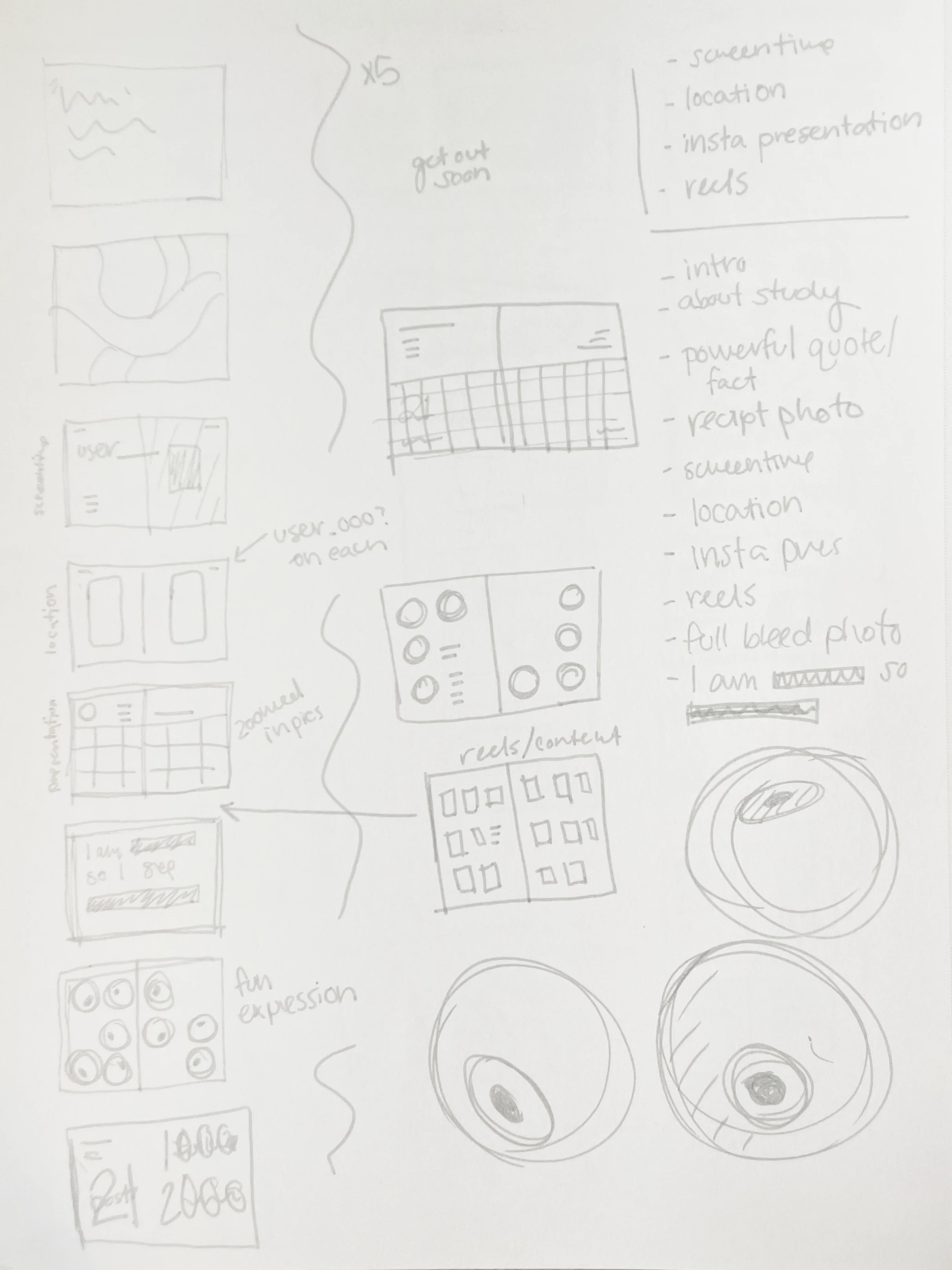
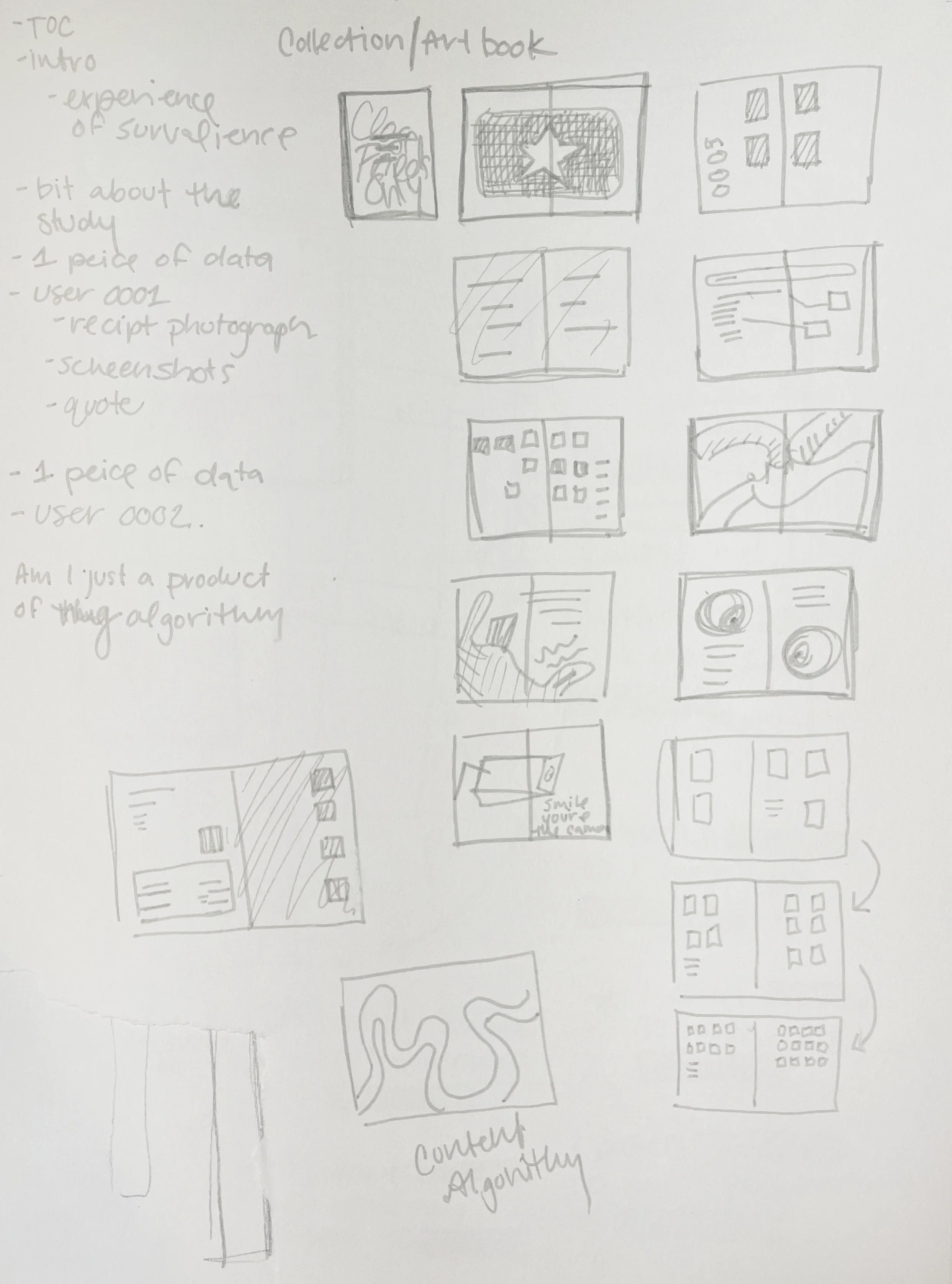
Spreads from the archive
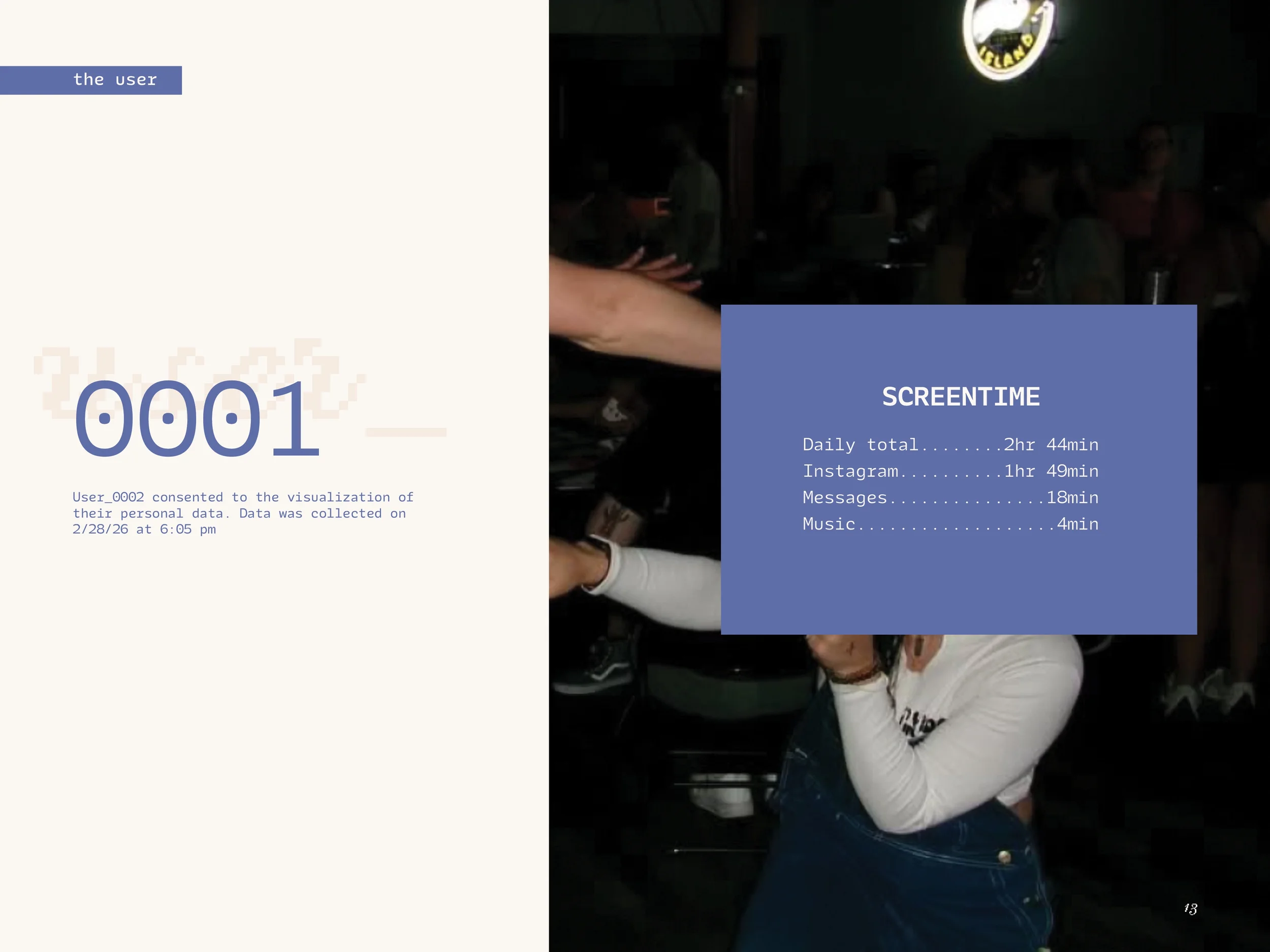
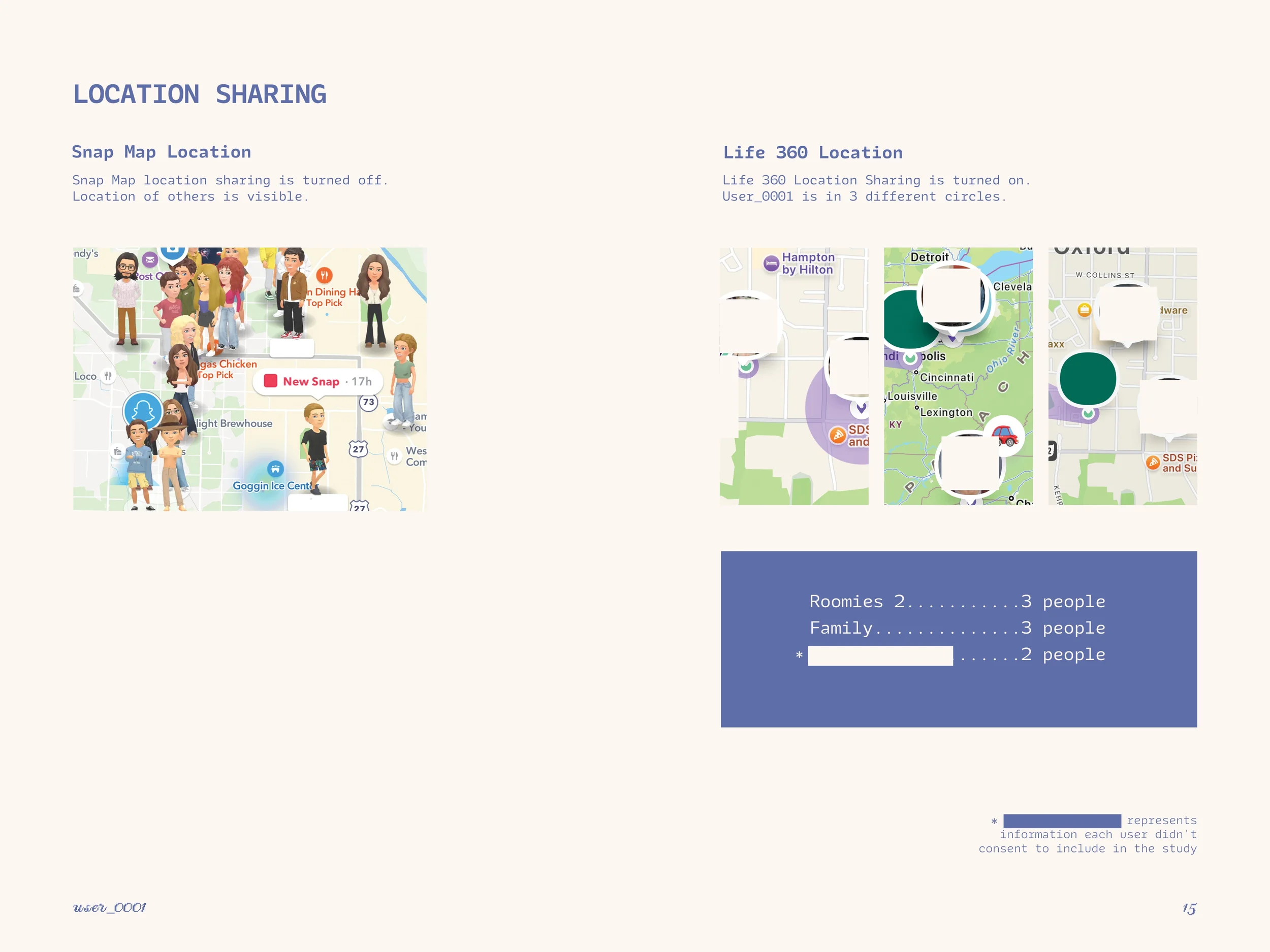
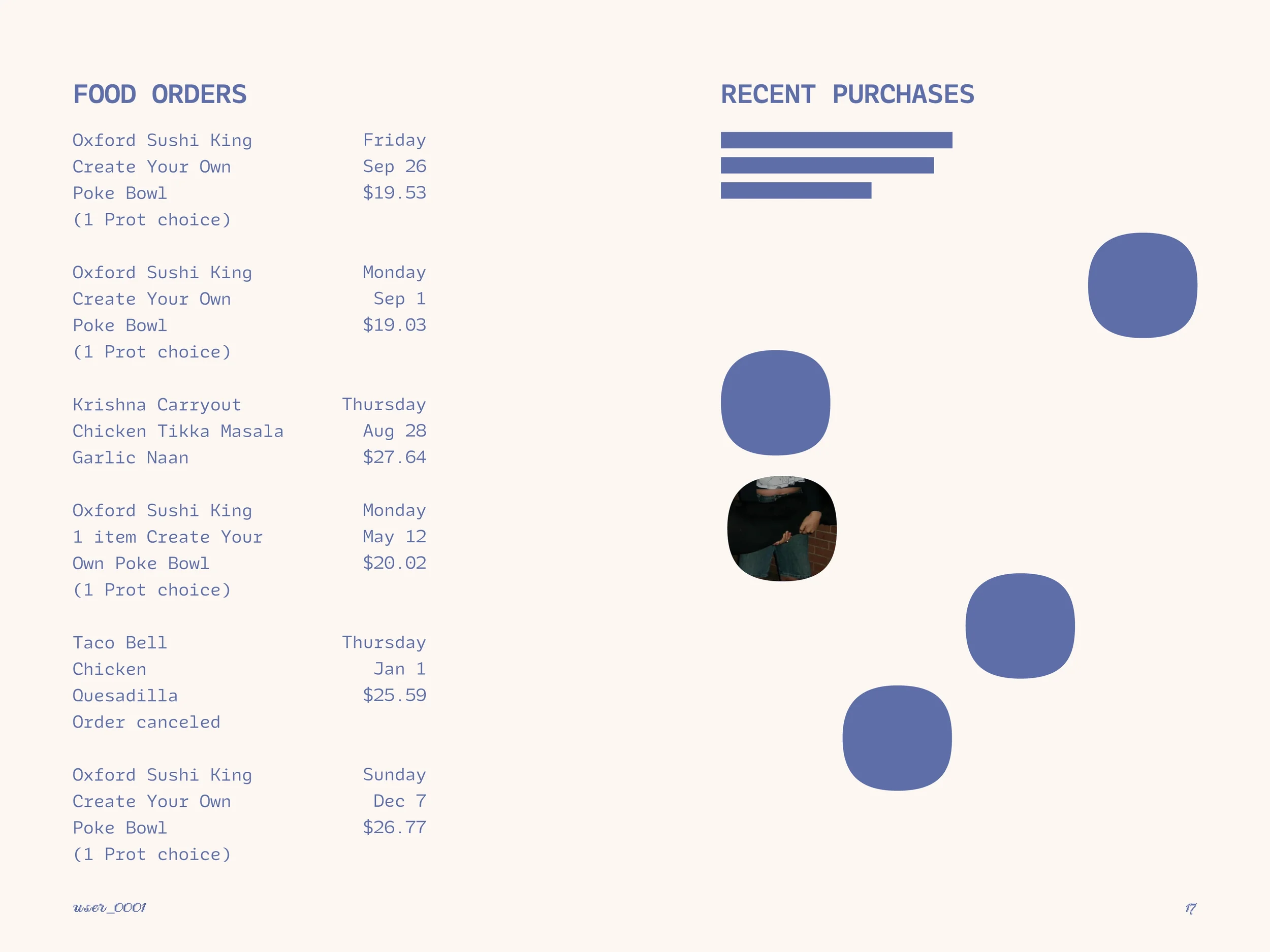
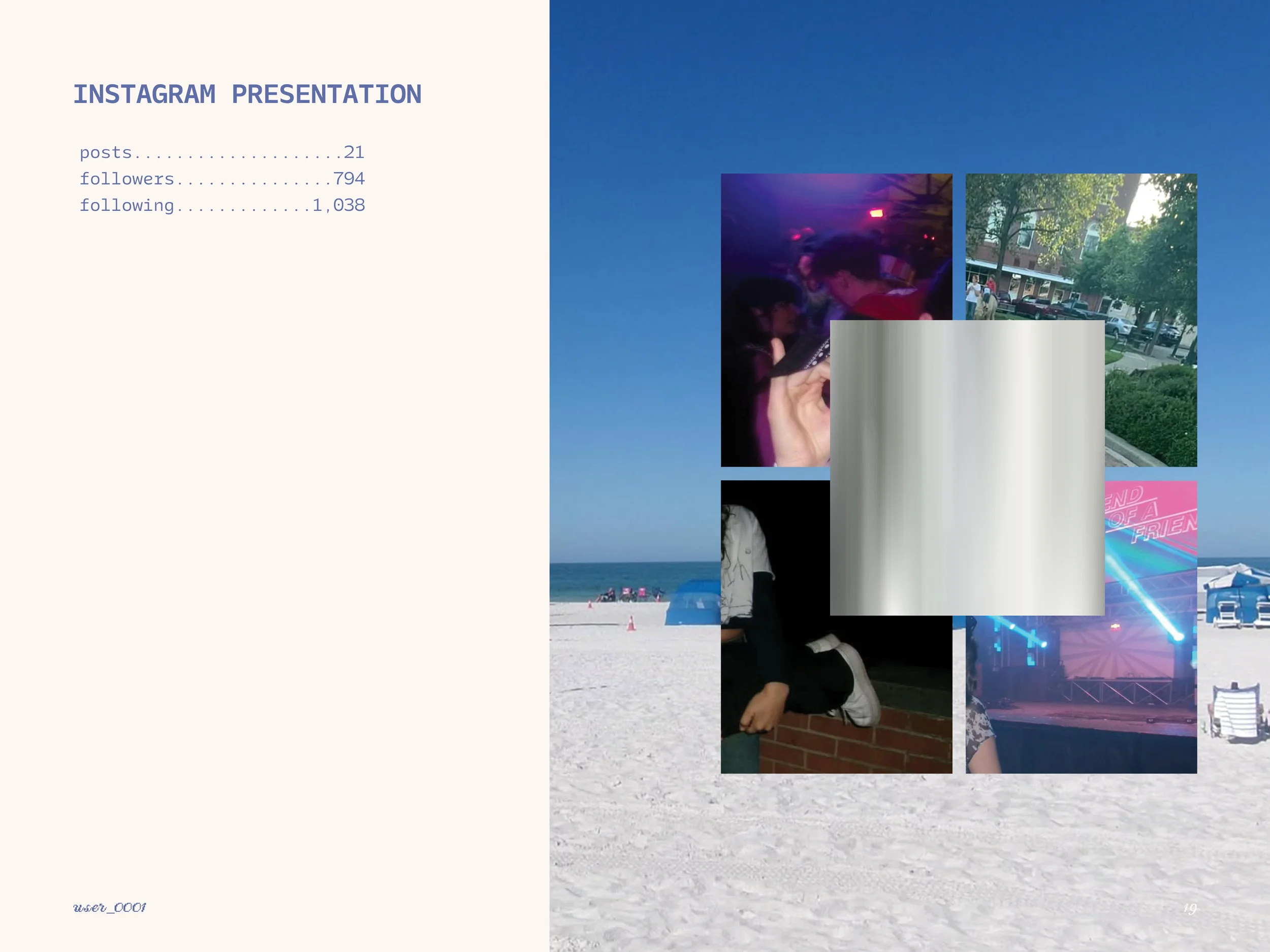
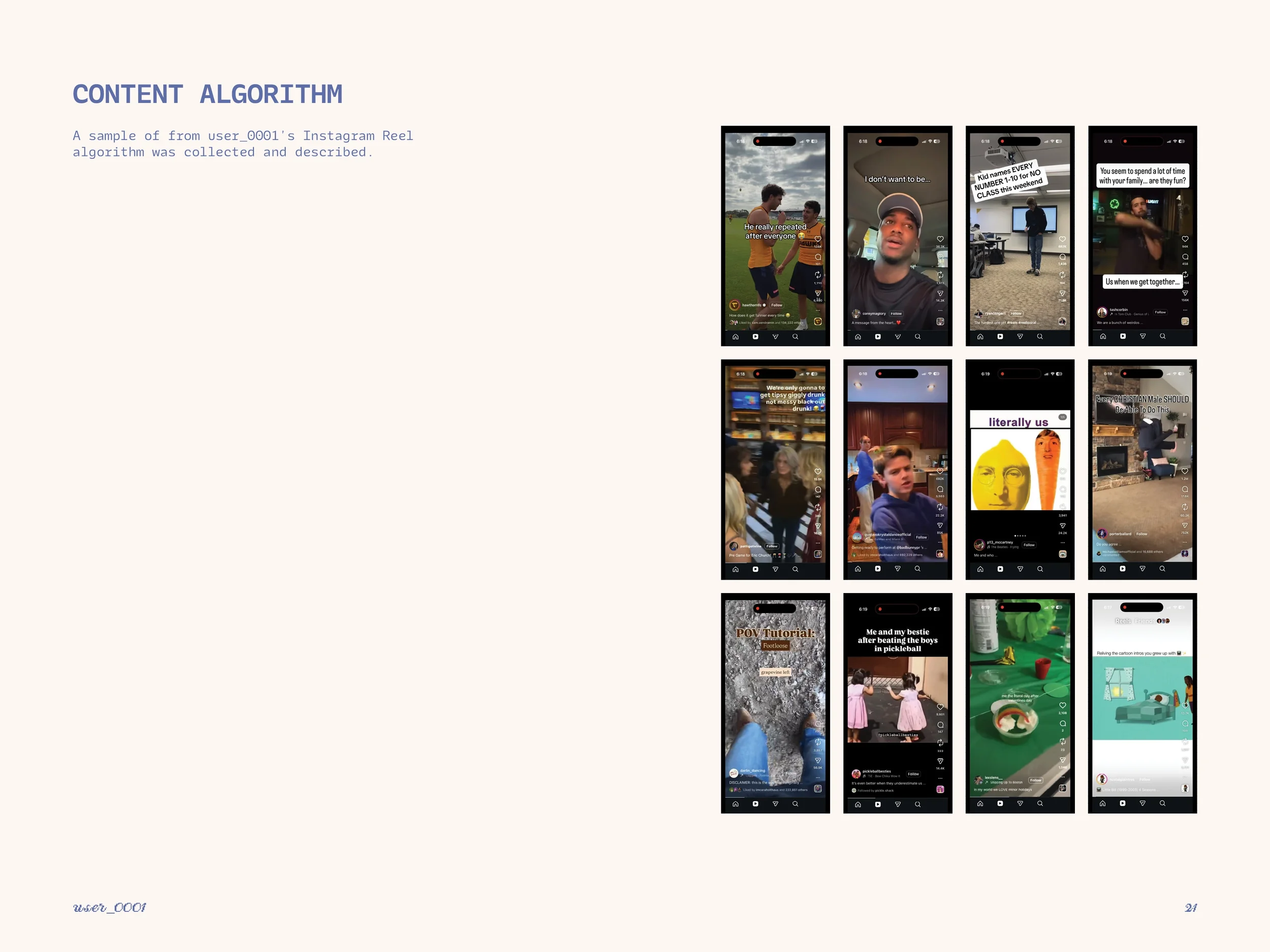
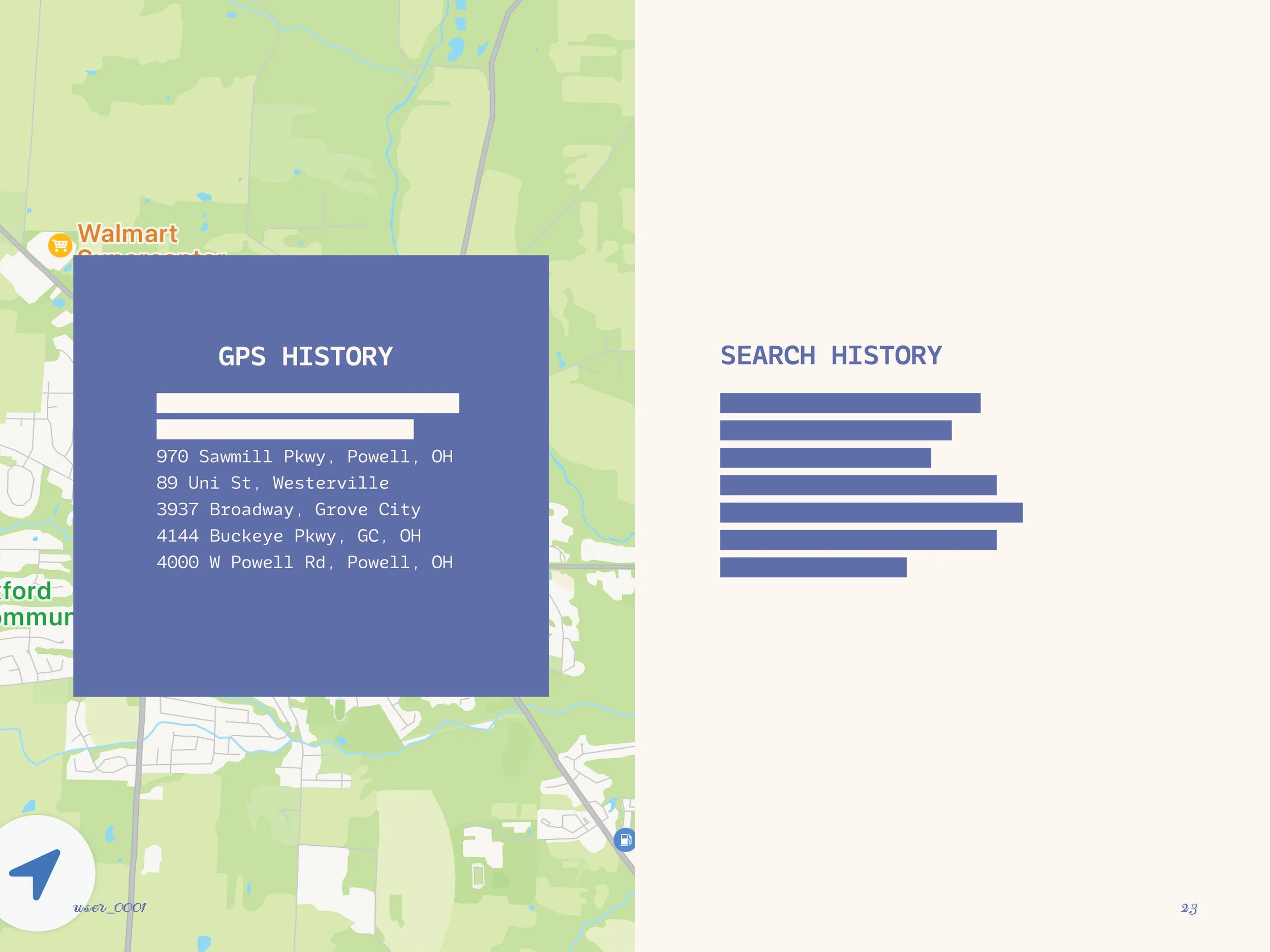
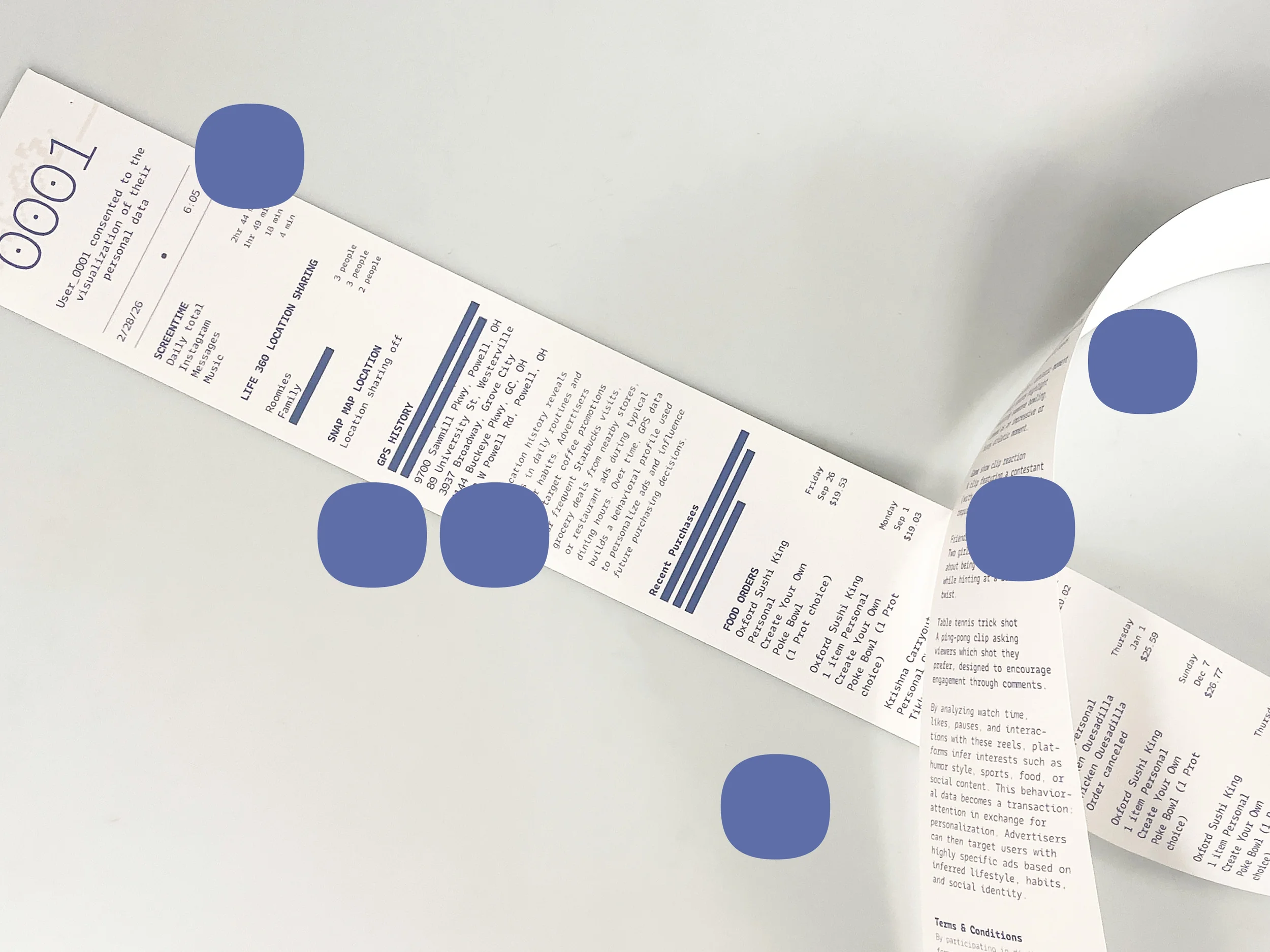
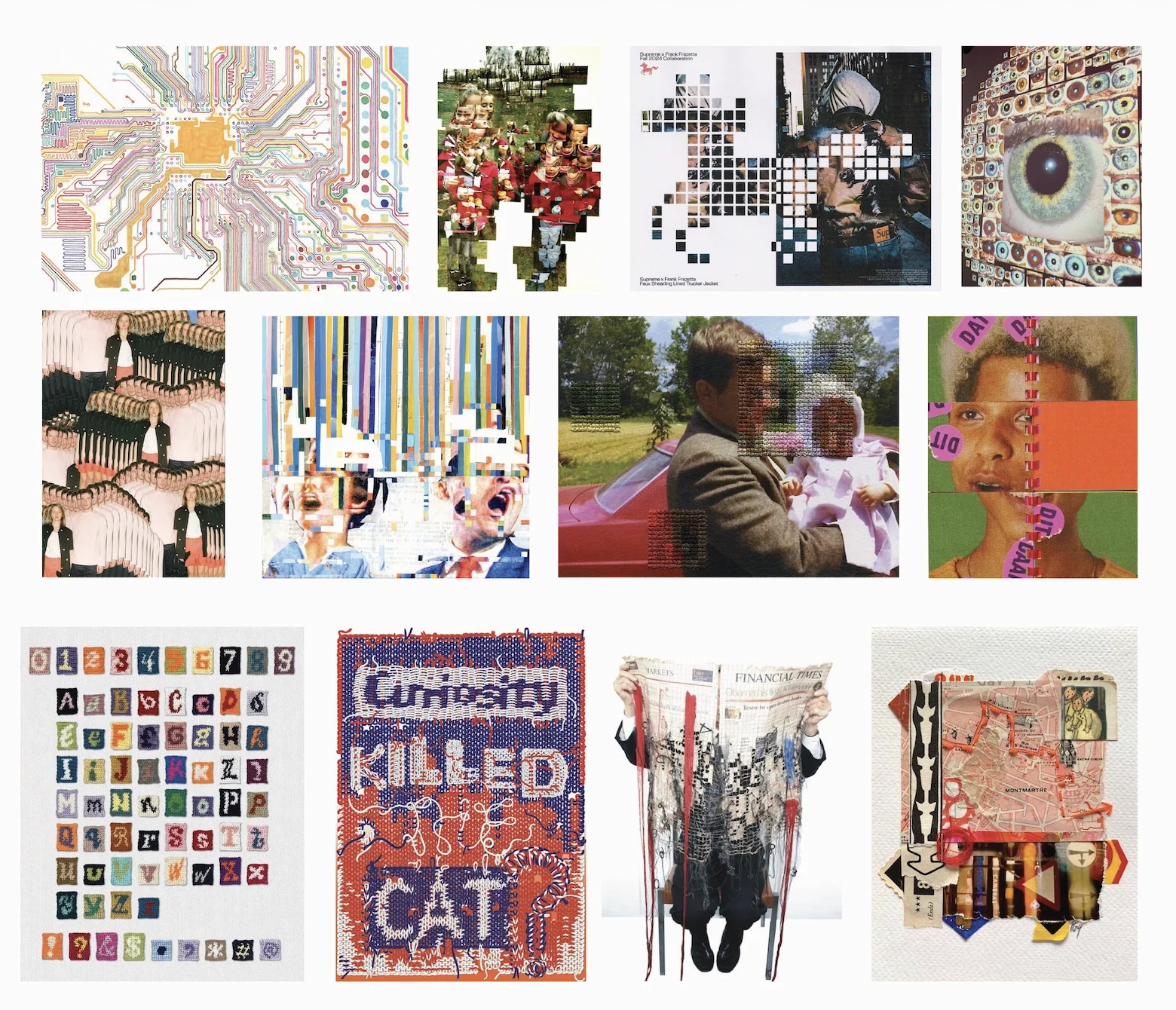
Receipt-like forms visualize the transactional nature of digital surveillance, encouraging close reading of information often ignored within everyday scrolling. Distorted and mirrored elements invite self-reflection, while color-coded systems, monospaced typography, and layered dot patterns reference the structured, impersonal nature of digital tracking and reveal what is often hidden in plain sight.
Visual elements
Overall, this project helped me navigate balancing clarity within work that is meant to be conceptual. It also allowed me to explore creating unique systems for data visualization targeted at a specific audience.